Facial Features Without Plastic: Safe Embroidery and Durable Expressive Detailing
Why plastic safety eyes pose choking risks for infants, and how to master safe, expressive embroidered facial features.
Welcome to the Cute Wendy workroom notebook. If you have ever sewn a plush bear, rag doll, or stuffed animal only to watch its neck flop, its seams burst on the first wash, or its eyes turn into a choking hazard, this site is written for you.
Most soft toy instructions provide a pattern outline and a list of assembly steps. They rarely explain why a seam split under tension, why cotton shrinks differently from polyester fleece when laundered, or how stuffing density alters the final geometry of a curve.
Here we focus entirely on the physical craft underneath softie making. We examine textiles, structural stitching, child safety standards, and facial embroidery techniques so that every plush creature you construct remains safe, structural, and beautiful through years of genuine play.
To build toys that endure real childhood handling, every construction choice must balance structural integrity with tactile comfort.
If you are starting from scratch, the master construction guide walks one softie from pattern to finished toy, flagging the decisions that determine how long it survives.
Why plastic safety eyes pose choking risks for infants, and how to master safe, expressive embroidered facial features.
Mastering concave and convex seam curves, stay-stitching, notching mechanics, and specialized turning tools.
A technical comparison of siliconized fiberfill, non-siliconized polyester, carded wool, and foam for stuffed toys.
How stitch density, seam allowance geometry, and stress-point reinforcement prevent soft toy seam failure under pressure.
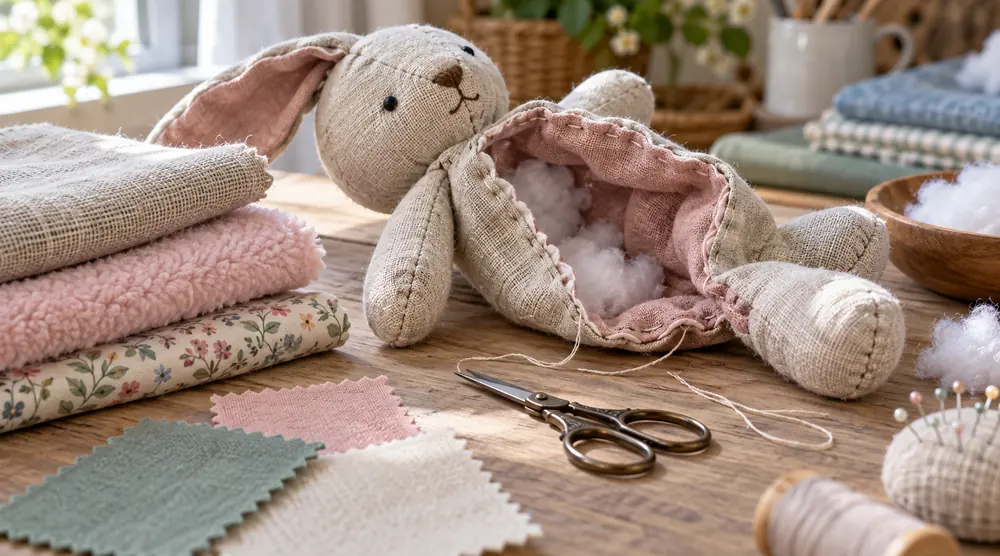
How cotton, polyester fleece, minky, and felt behave over years of machine laundering, handling, and play.